
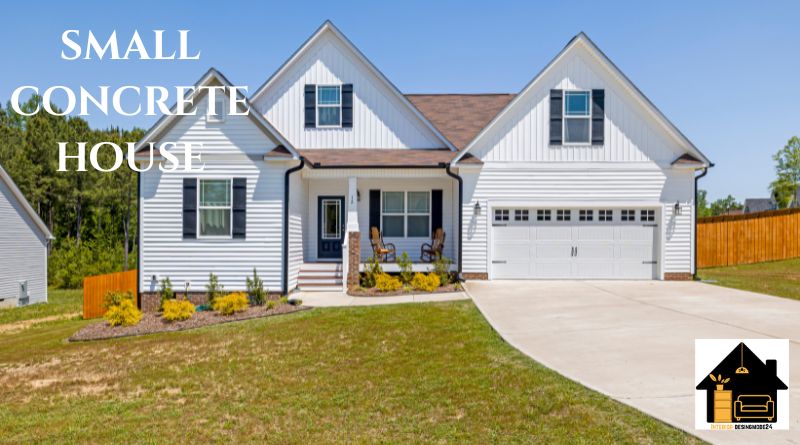
There’s something refreshingly honest about a small concrete house. No pretense, no unnecessary fuss — just solid walls, clean lines, and a space that actually works for the people living in it. While the world keeps pushing bigger homes with rooms nobody uses, more and more people are waking up to the idea that smaller can be smarter, and concrete might just be the best material to build that life around.
Why Concrete Makes Sense for a Small Home
When you’re working with limited square footage, every decision carries more weight. The material you build with isn’t just an aesthetic choice — it shapes how the home feels in summer heat, how quiet it is at night, and how much you’ll spend keeping it standing twenty years from now. Concrete checks every one of those boxes in ways that wood or brick simply don’t match.
A small concrete house holds temperature remarkably well. The thermal mass of concrete absorbs heat during the day and releases it slowly at night, which means your cooling and heating bills stay manageable throughout the year. In a region like Pakistan, where summers push temperatures to extremes, that natural regulation isn’t a luxury — it’s a practical necessity. Beyond temperature, concrete is fireproof, resistant to pests, and doesn’t rot. For a homeowner who wants to build once and live peacefully, that durability is the whole point.
There’s also the matter of strength. Concrete handles load-bearing stress better than most materials, which gives architects and builders more freedom when designing a compact layout. You can open up walls, create larger window spans, or build upward without the structural compromises that come with lighter materials. A small concrete house can feel far more open and airy than its footprint suggests, simply because the structure itself allows for creative design decisions.
Designing a Small Concrete House That Feels Like Home
The biggest fear people have about going small and going concrete is that the result will feel cold or institutional. That fear is understandable, but it’s also outdated. Modern design has completely reimagined what a small concrete house can look and feel like from the inside.
Natural light is the first and most powerful tool. Large windows, skylights, and open courtyards transform the atmosphere of a concrete interior. When light moves across a concrete wall through the course of a day, the texture and warmth it reveals are genuinely beautiful — nothing like the gray, lifeless surfaces people imagine. Pair that with warm wood accents on floors, shelving, or ceiling beams, and the space feels grounded and livable almost immediately.
Furniture choices matter more in a compact home, so thoughtful built-ins — concrete benches, shelving units integrated into walls, raised sleeping platforms — reduce clutter and make the space work harder. The home stops being a container for stuff and starts being a carefully considered living environment. Many people who’ve moved into a small concrete house describe the experience as freeing rather than limiting.
The Cost and Long-Term Value
Building small with concrete isn’t just emotionally satisfying — it makes financial sense. The initial cost per square foot for concrete can be higher than traditional materials, but the long-term savings on maintenance, energy, and repairs are significant. A well-built small concrete house requires very little intervention over decades. There are no termites eating through your walls, no warped wood panels to replace, no yearly paint jobs to protect a vulnerable exterior.
For first-time builders or those working with a modest budget, a small concrete house also offers a realistic path to full ownership without debt stretching into retirement. You build what you can afford, you build it well, and you live in something that belongs to you completely.
The small concrete house isn’t a compromise. It’s a choice — deliberate, practical, and quietly confident. And for many people today, it’s exactly the right one.
Read Also: Strata Property Maintenance