
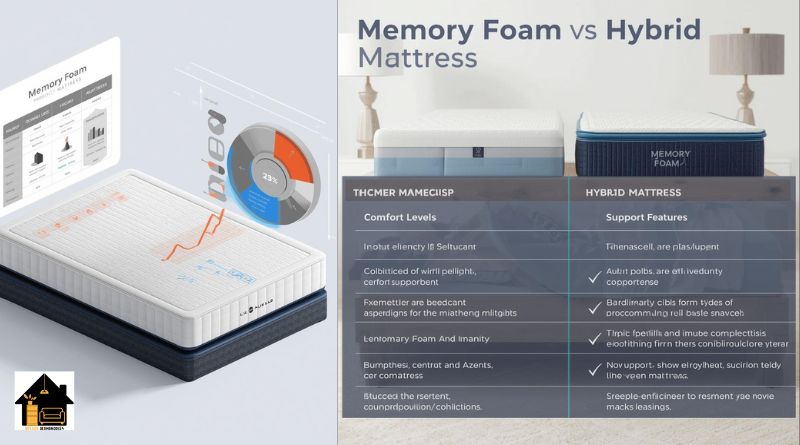
Choosing the right mattress can feel overwhelming, especially when you’re standing between two of the most popular options on the market today. If you’ve been trying to make a table comparing memory foam vs hybrid mattresses, you’re already on the right track — because understanding the differences side by side is the smartest way to figure out which one truly suits your sleep style, budget, and body.
Both mattress types have loyal fan bases, and for good reason. Memory foam mattresses have been around since the 1990s and remain a top pick for pressure relief and motion isolation. Hybrid mattresses, on the other hand, blend the best of foam and spring technology to offer a more balanced sleeping experience. But which one is right for you? Let’s dig in.
What Is a Memory Foam Mattress?
A memory foam mattress is made entirely from layers of foam — typically a top comfort layer of viscoelastic foam and a denser base support layer beneath it. The foam responds to your body heat and weight, contouring closely to your shape and relieving pressure at key points like your hips, shoulders, and lower back. This close-conforming feel is a signature quality that many sleepers absolutely love. However, traditional memory foam has a reputation for sleeping hot because it traps body heat within its dense structure. Many modern versions address this with cooling gel infusions or open-cell foam technology, but it’s still a factor worth considering before you make a table comparing memory foam vs hybrid mattresses for your own needs.
What Is a Hybrid Mattress?
A hybrid mattress combines a coil spring support core with comfort layers of foam, latex, or both on top. The coils provide a more traditional, bouncy feel while also promoting airflow, which naturally keeps the mattress cooler throughout the night. The foam or latex layers on top still offer contouring and pressure relief, though typically not as deep or enveloping as a full memory foam mattress. Hybrids tend to be more responsive, making it easier to move around or change positions — a big plus for combination sleepers and couples.
Side-by-Side Comparison Table
To truly make a table comparing memory foam vs hybrid mattresses in a way that’s useful, here’s a clear breakdown across the factors that matter most to sleepers:
| Feature | Memory Foam | Hybrid |
|---|---|---|
| Support Core | All-foam layers | Coil springs + foam/latex |
| Pressure Relief | Excellent — deep contouring | Good — moderate contouring |
| Motion Isolation | Outstanding | Good, not as strong |
| Temperature | Sleeps warmer | Cooler due to airflow |
| Bounce & Responsiveness | Low — slow response | High — easy to move around |
| Edge Support | Weaker | Stronger coil edges |
| Noise | Completely silent | Minimal coil noise |
| Durability | 7–10 years | 8–12 years (coils last longer) |
| Price Range | Budget to mid-range | Mid-range to premium |
| Best For | Side sleepers, light sleepers, couples | Hot sleepers, combo sleepers, heavier individuals |
Which Sleeper Type Benefits Most from Each?
When you make a table comparing memory foam vs hybrid mattresses, the numbers and categories tell a story — but your sleep position tells the final chapter. Side sleepers generally do better on memory foam because the deep contouring reduces pressure on the shoulders and hips. Back and stomach sleepers often prefer the firmer, more responsive surface of a hybrid, which keeps the spine in a neutral position without letting the hips sink too far. Hot sleepers are almost always better served by a hybrid, while anyone who shares a bed with a restless partner will appreciate the motion isolation that memory foam offers so reliably.
Which One Should You Choose?
There’s no universal winner here — it genuinely depends on your personal priorities. If you run hot at night, move around often, or need strong edge support, a hybrid is likely your best match. If you’re a side sleeper dealing with joint pain, share a bed with someone who tosses and turns, or simply prefer that slow, cradling feel, memory foam will probably serve you better. Price also plays a role: memory foam options are generally more accessible at the lower end of the market, while quality hybrids tend to cost a bit more due to their coil systems.