
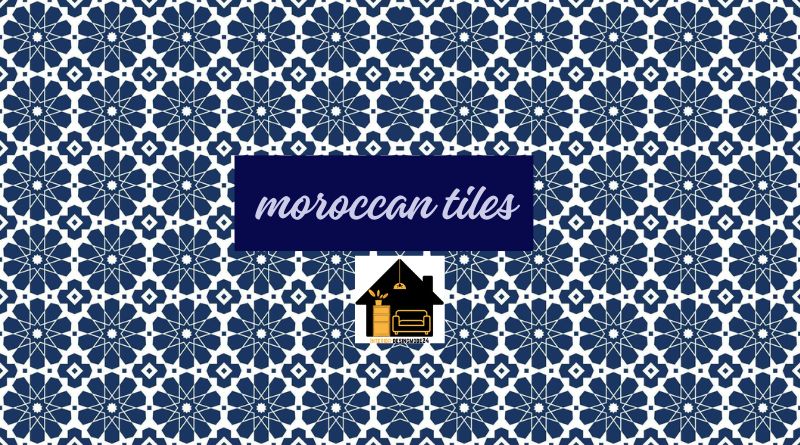
Few design elements carry as much visual power as moroccan tiles. Whether you’ve spotted them in a boutique hotel lobby, a sun-drenched courtyard, or a beautifully styled kitchen, these tiles have a way of stopping you in your tracks. There’s something almost hypnotic about the geometry — the way each individual piece locks into the next to form a larger, breathing pattern. They’ve been around for centuries, and yet they never feel dated. If anything, they feel more relevant today than ever.
A Tradition Rooted in History
The story of moroccan tiles stretches back nearly a thousand years, drawing from a rich blend of Arab, Berber, and Andalusian influences. When Islamic artisans were prohibited from depicting living figures in religious spaces, they turned their creativity toward geometry instead — and what emerged was extraordinary. Intricate star patterns, interlocking diamonds, flowing arabesques. These weren’t just decorative choices; they carried deep cultural meaning, representing the infinite nature of the universe. The city of Fez became the heartbeat of this tradition, home to master craftsmen called maalems who passed their knowledge down through generations. Each tile was — and in many traditional workshops still is — cut and laid entirely by hand, a painstaking process that gives every installation a warmth and slight imperfection that no machine can replicate. That human touch is exactly what makes them feel alive on a wall or floor.
What Makes Them So Distinctive
The Geometry and Color
What separates moroccan tiles from virtually every other tile tradition in the world is the mathematics hiding beneath the beauty. The patterns are built on rigid geometric logic — typically constructed around six, eight, or twelve-pointed stars — yet the final result feels organic and almost effortless. Colors play an equally important role. The classic palette leans into deep cobalt blues, warm terracotta, forest green, ivory, and black. These aren’t arbitrary choices; they reflect the natural landscape of Morocco itself, from the blue-painted walls of Chefchaouen to the ochre sands of the Sahara. Modern interpretations have expanded into dusty pinks, sage greens, and even monochrome schemes, but the underlying character remains the same.
Zellige vs. Cement Tiles
Not all moroccan tiles are made the same way, and understanding the difference matters when you’re choosing them for a space. Zellige tiles are the traditional form — hand-chiseled from fired clay and glazed in vivid colors. The glaze is deliberately uneven, which creates a reflective, jewel-like quality as light moves across the surface throughout the day. Cement tiles, on the other hand, are unglazed and made by pressing pigmented cement into molds. They have a matte, slightly chalky finish that feels more rustic and earthy. Both are beautiful; they just serve different moods. Zellige brings drama and shimmer, while cement tiles bring texture and groundedness.
How to Use Them in Modern Interiors
Kitchens and Bathrooms
These are the two rooms where moroccan tiles earn their reputation most reliably. A kitchen backsplash tiled in a blue and white zellige pattern can transform an otherwise ordinary room into something that genuinely feels considered and crafted. In bathrooms, covering an entire shower enclosure floor to ceiling creates an immersive effect that feels more like a spa in Marrakech than a suburban home. The key is confidence — half-measures rarely work with patterns this bold.
Floors and Outdoor Spaces
On floors, cement moroccan tiles are particularly effective. A hallway laid with a repeating star pattern makes an immediate impression the moment someone walks through your front door. In outdoor courtyards, terraces, or around pools, they handle the elements well and develop a beautiful patina over time. Pairing them with whitewashed walls and simple wooden furniture lets the tiles do the talking without the space feeling cluttered.
Why They Endure
Trends come and go, but moroccan tiles have outlasted every design movement of the past century. Part of it is the craftsmanship — something made by skilled human hands simply carries a different energy than mass-produced alternatives. Part of it is the versatility; they work in rustic farmhouses and minimalist modern apartments alike. But mostly, it comes down to the fact that they tell a story. Every pattern connects you to a lineage of artisans who cared deeply about beauty for its own sake. In a world of disposable design, that kind of intention is rare — and people feel it.
read also: mytyles